


Air quality is one of the key factors in the well-being and health of the population, especially urban populations, which are subjected to a higher level of pollutants than rural ones.
Major cities have implemented Low Emission Zones as part of their mobility policies, but to determine whether the measure is sufficient or not, we must analyse the data we have available.
Carried out by Maruxa Moreira | Raquel Rodríguez | Alejandra López
Qualification Master in Data Science
Technologies Excel | Power Query | Power BI | Datasets | Databases | Python | Machine Learning
What is the motivation?
The main objective of this project is to develop a Predictive model for air quality in Madrid, incorporating innovative exogenous variables such as urban traffic, special events, and mobility policies.
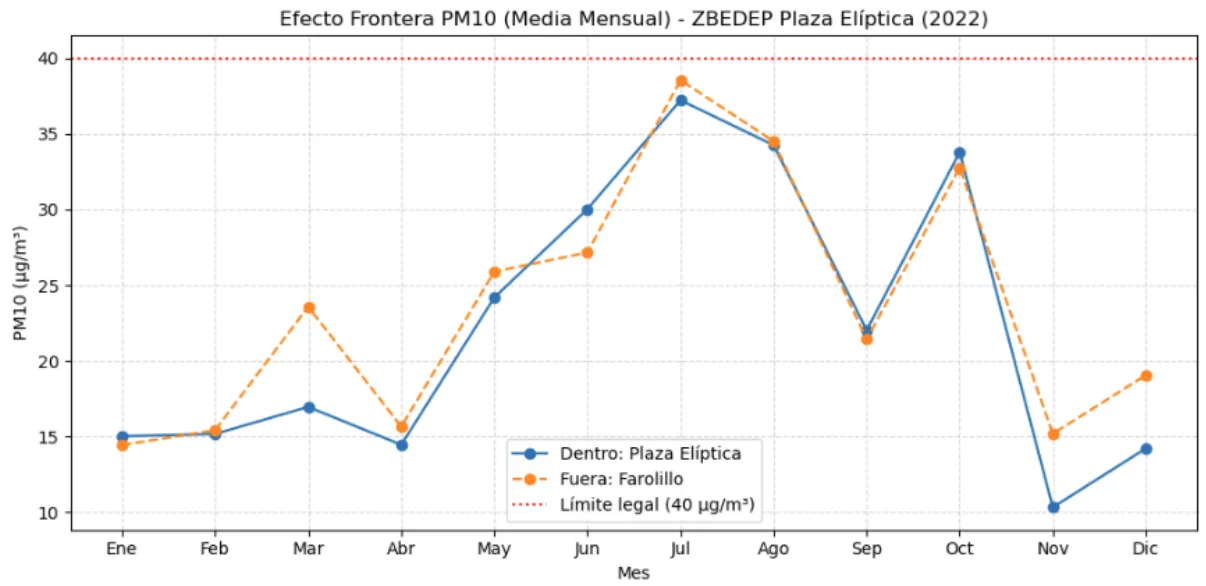
This is a comparative analysis of traffic behaviour inside and outside of a Low Emission Zone (LEZ), to evaluate its impact on pollution levels, especially during exceptional episodes.
Development
The project has included the following elements:
- Urban traffic in and out of LEZBenchmark of vehicular flows.
- Special eventsdetection of variables that trigger exceptional pollution episodes.
- Mobility policiesAnalysis of the effect of Low Emission Zones.
Conclusions
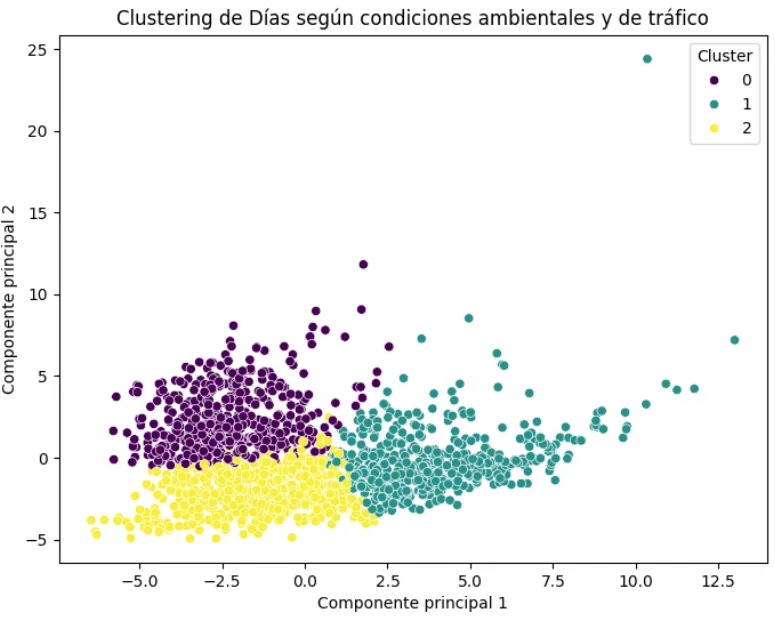
The integration of numerous pollution-related factors allows for an accurate and contextualised assessment, favouring reliable predictions for early pollution alerts. The workflow has made it possible to determine the key factors, thus facilitating their monitoring and the creation of interactive maps that take them into account.
The conjunction of data science, machine learning, and visualisation has resulted in a practical tool not only for authorities, but also for citizens who want to look after their health.
 English (UK)