

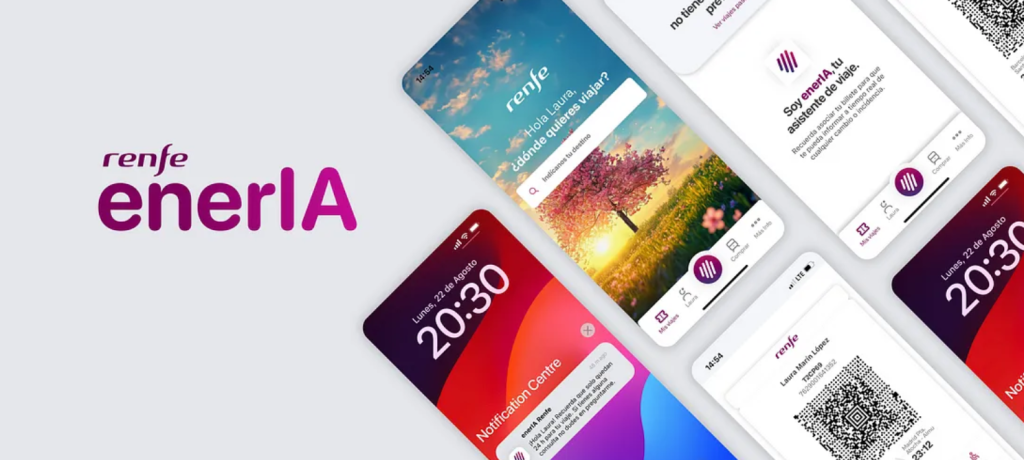
In an increasingly competitive rail market, Renfe faces a monumental challenge: to rebuild the trust of a disgruntled user base. Frequent delays, cancellations and technical problems, as well as insufficient customer service, have plunged the company into a major reputational crisis and the number of passengers using its services is falling every year.
How can we turn these pains into opportunities to reposition Renfe as a leader in the sector?
Carried out byr Begoña Rodríguez | Francesc Mora | Laura Oliveros | Samuel Bravo
Qualification Bootcamp in UX/UI Design
Methodologies Design Thinking
Tools Figma | WordPress
The solution
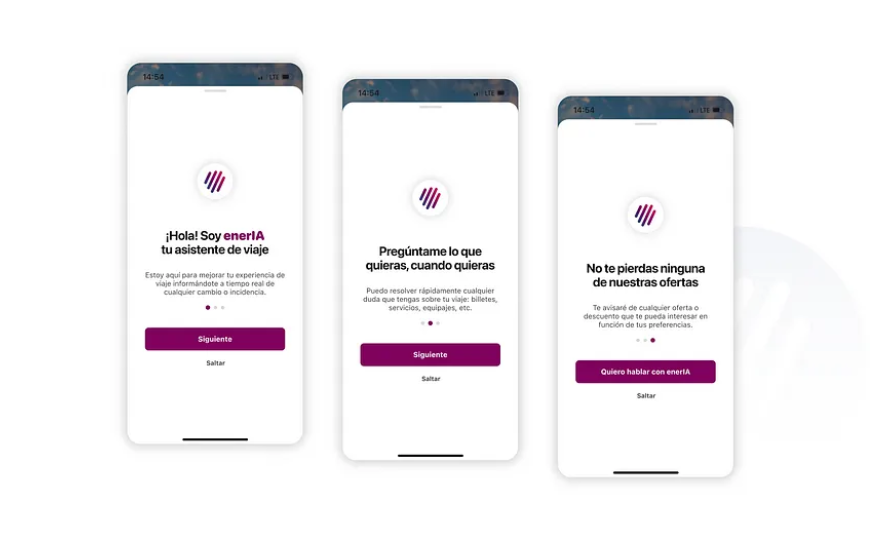
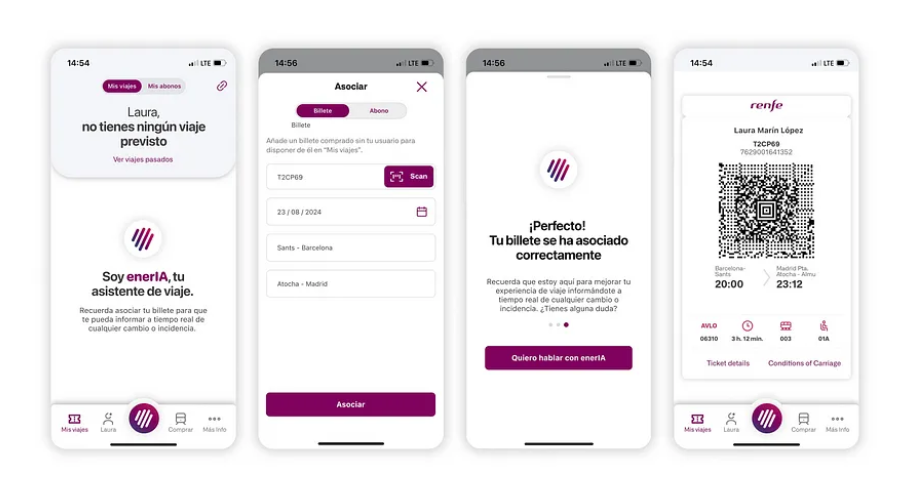
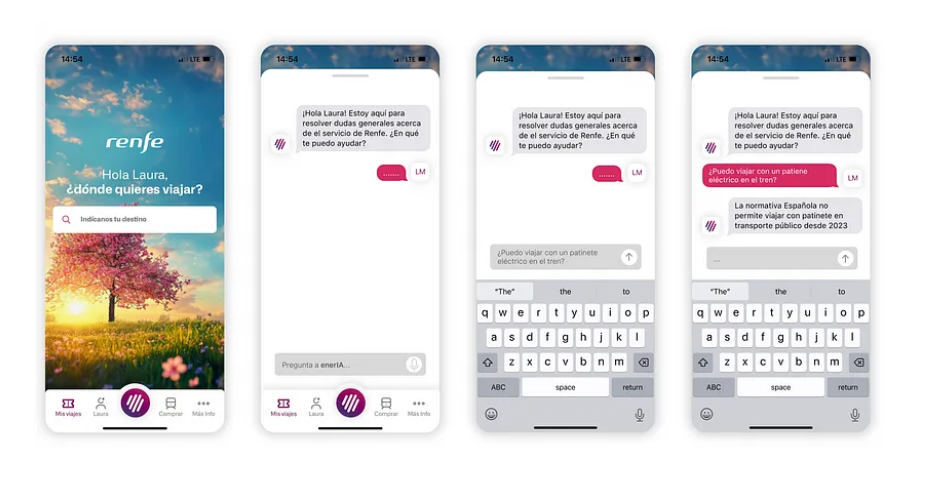
EnerIA, a virtual assistant with artificial intelligence integrated into the Renfe app that transforms the experience by accompanying, informing and assisting passengers at every stage of their journey.
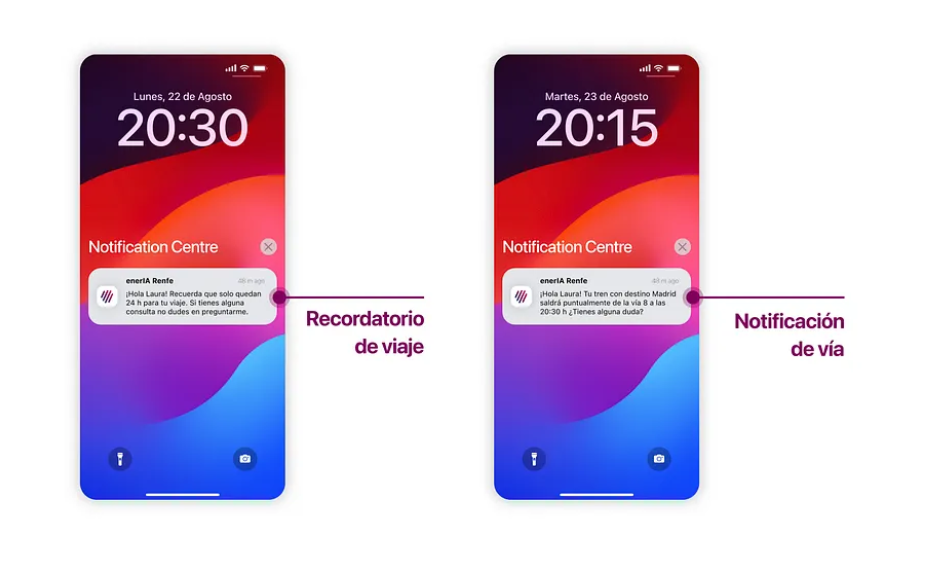
- Real-time assistancePush notifications with trip reminders, track number, platform changes and incident updates, even in uncertain situations.
- Efficient customer serviceFAQs and general queries
- Personalised commercial workPersonalised offers and discounts based on the user's profile.
✍️ More about the project on Medium: https://lc.cx/HF6mDZ
Conclusions
The launch of EnerIA, Renfe's virtual assistant with artificial intelligence, marks a turning point in the relationship between the company and its users. By improving the user experience, Renfe achieves significant advances in recruitment, retention, sales and brand reputation:
- Reduction of complaints and claims by channelling communication effectively.
- Increase in downloads and use of the app, increasing user loyalty.
- Operational optimisation, reducing dependence on traditional customer service channels.
- Increase in sales, thanks to a closer and more personalised commercial strategy.
In short, EnerIA is much more than technology: it is the bridge that connects Renfe with a vision of the future, towards more efficient, human and accessible transport.
 English (UK)