

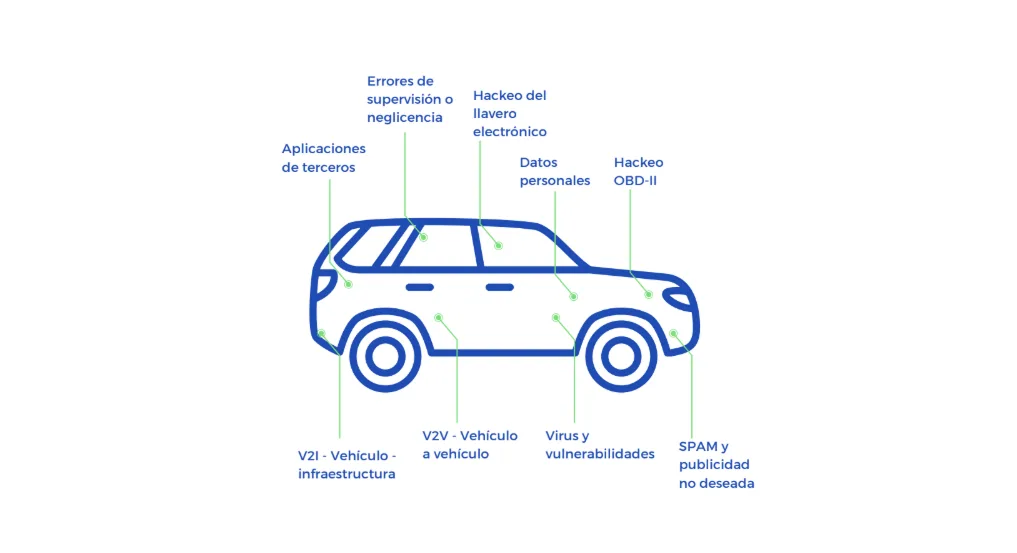
Cybersecurity tends to focus on digital devices for work or leisure, such as computers or mobile phones, but it needs to go beyond that. The automotive industry is becoming increasingly connected and reliant on new technologies, so it also needs protection against attacks and fraud.
The increasing complexity of in-vehicle systems, coupled with their constant connection to the internet, has given rise to new cybersecurity threats. Revolve is working to detect and combat them through advanced technological solutions.
Carried out by Fernando Ramirez
Programme Cybertalent: Cybersecurity Entrepreneurship Programme | In collaboration with the National Institute for Cybersecurity (INCIBE)
Technologies Threat Scanner | Antivirus | Remote Access
What is the motivation?
The incorporation of new technologies in vehicles improves comfort, but also opens doors to cyber-attacks. Revolve specialises in protecting these systems and mitigating risks for its clients.
Program aims
- Prevent unauthorised access to internal systems that can obtain personal data and threaten the privacy of vehicle occupants.
- Protecting remote access systems by attackers, which can lead to a loss of vehicle control from which recovery is not possible.
- Getting self-driving systems to work correctly, avoiding confusion or putting occupants at risk.
Development
The process of addressing these problems includes the creation of three levels of protection:
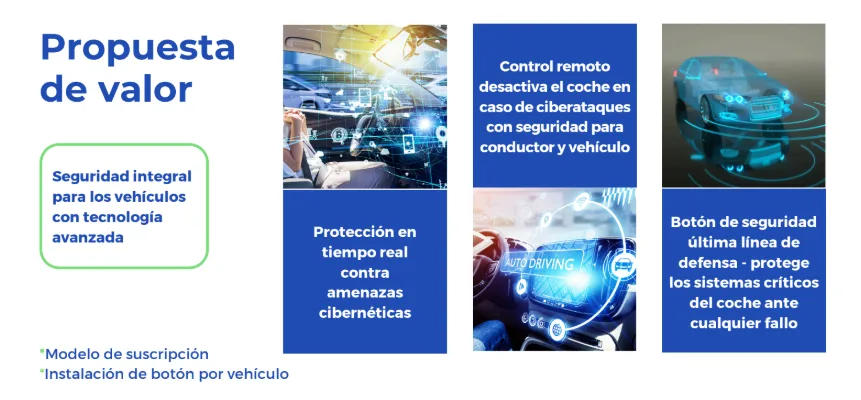
- Threat scannerIt is dedicated to a constant analysis of the vehicle. If it detects a threat, it activates an antivirus to protect the systems.
- Second line of defenceIn case the threat is not detected or the antivirus fails to stop it, a two-stage security measure is activated. During the first phase, the user will be able to access the system via a mobile device, which will allow him to identify the threat and safely disable the car. In the second phase, all external inputs will be blocked, maintaining only the basic driving functionality of the vehicle.
- Additional layers of securityA vehicle has many individual elements that require specific treatment. All those with known vulnerabilities, such as third-party applications, electronic key fobs or even the brake circuitry, have protections specially designed for them.
Results
Real-time protection prevents customers from falling victim to cyberattacks that could endanger them while the vehicle is in operation, as well as more common attacks such as data theft or unauthorised access.
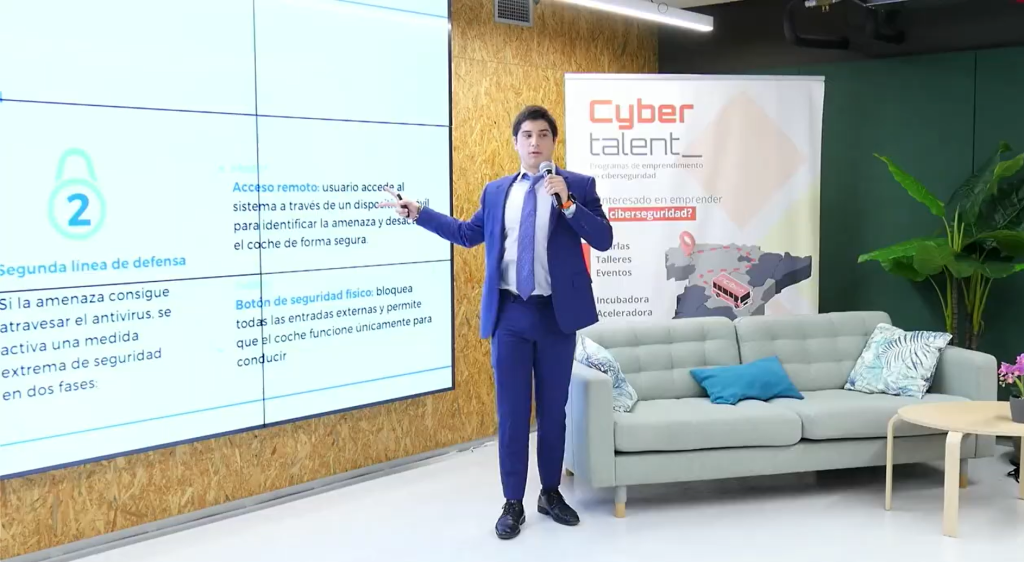
Connected vehicles introduce challenges such as autonomous driving, which demands real-time protection. Revolve guarantees this security so that customers only need to worry about enjoying their car.
 English (UK)