


Big Data has become a much-used term, but its usefulness in the real world is not always clear. In sports, its application is revolutionising the way in which athletes' performance is analysed and their training and competition methods are adapted.
From the massive collection of data to the moment of its interpretation with advanced algorithms, Big Data is transforming both the work of professionals and the user experience of amateurs.
Carried out by Jorge Albert | Marco Aloisi | Alberto Yesares | Carolina Romano
Programme Software Development Engineering
Technologies ML | Cloud | AWS | Performance Analysis Systems | IMU | GPS | GPS
What is the motivation?
The evolution that sport has undergone has led it to reach levels of physical, technical and tactical demands unprecedented. Different disciplines require increasingly trained and precise athletes, so being able to detect key differences in performance requires more complex tools.
The sporting transformation has made the use of essential Big Data as a tool for advanced analysis, as it is capable of offering detailed real-time information and optimising the performance of athletes and technical teams.
Program aims
- To define the concept of Big Data and the relevance it has in the sporting arena
- Identify its key benefits, such as performance enhancement, training customisation or improving the viewer experience.
- Analyse the challenges that are faced, such as data quality and collection, or lack of standardisation.
- Examine the distribution of sports data in diverse areas, such as training, athlete performance, analysis and statistics.
What are its applications?
The use of Big Data varies according to the sports to which it is applied:
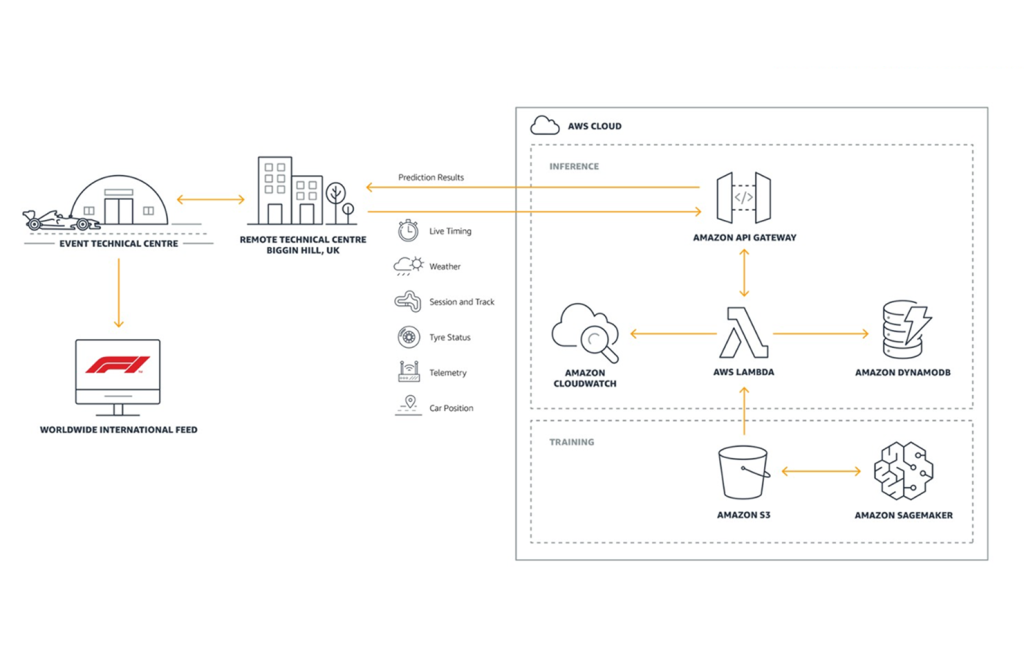
- Formula 1Motorsport requires continuous data collection on the performance of the cars, so that we can analyse what can be improved to ensure performance continues to improve. Sensors in the car collect the data, which is then analysed by engineers and data scientists using the Cloud (thanks to F1's agreement with AWS) and Machine Learning.
- FootballBig Data: the beautiful game not only applies Big Data on the pitch, analysing the performance of players and different strategies, but also makes it possible to select the most suitable signings based on their data and statistics. The level of detail obtained makes it possible to evaluate different trends, but also to bring the data closer to the spectator by displaying it in a visual and understandable way.
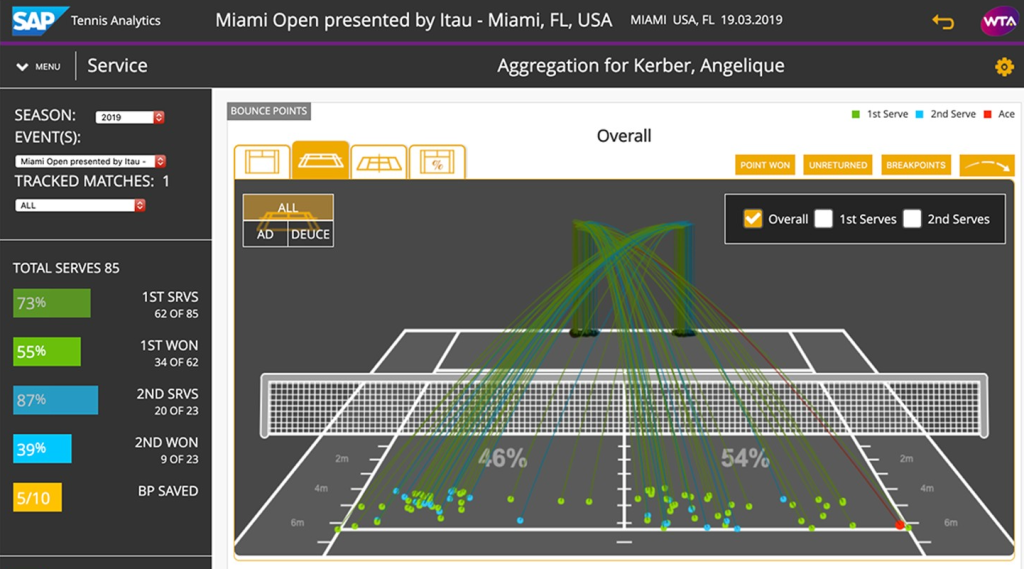
- TennisThe spectator of this sport is used to seeing the result of Big Data even if they are not aware of it, as the Hawk-Eye shows them the real trajectory of the ball. The various sensors and cameras collect data on every aspect of the player's and opponent's movements, giving the spectator a live analysis of what is happening on the court in a simple and visual way.
- Volleyballbeing a sport with a smaller number of players and spectators does not mean that Big Data has left it aside. IMU and GPS technology allows 3D movement tracking of players to adapt the way they play to the team, while Video Challenge works in a similar way to Hawk-Eye, assisting referees and teams in reviewing bounces and plays.
Results
In more technical and high-precision competitions, the use of Big Data allows for all sorts of advanced forecasts and issue alerts for factors deviating from the norm in real-time, while in other areas they present data visually and intuitively, making it easier to interpretation and becoming a support tool that reduces complexity.
Thanks to its ability to transform large volumes of data into useful and actionable information, Big Data has become a key tool for improving training, preventing injuries, optimising strategies, and offering a highly immersive spectator experience.
 English (UK)